
Orangeries: part room, part conservatory
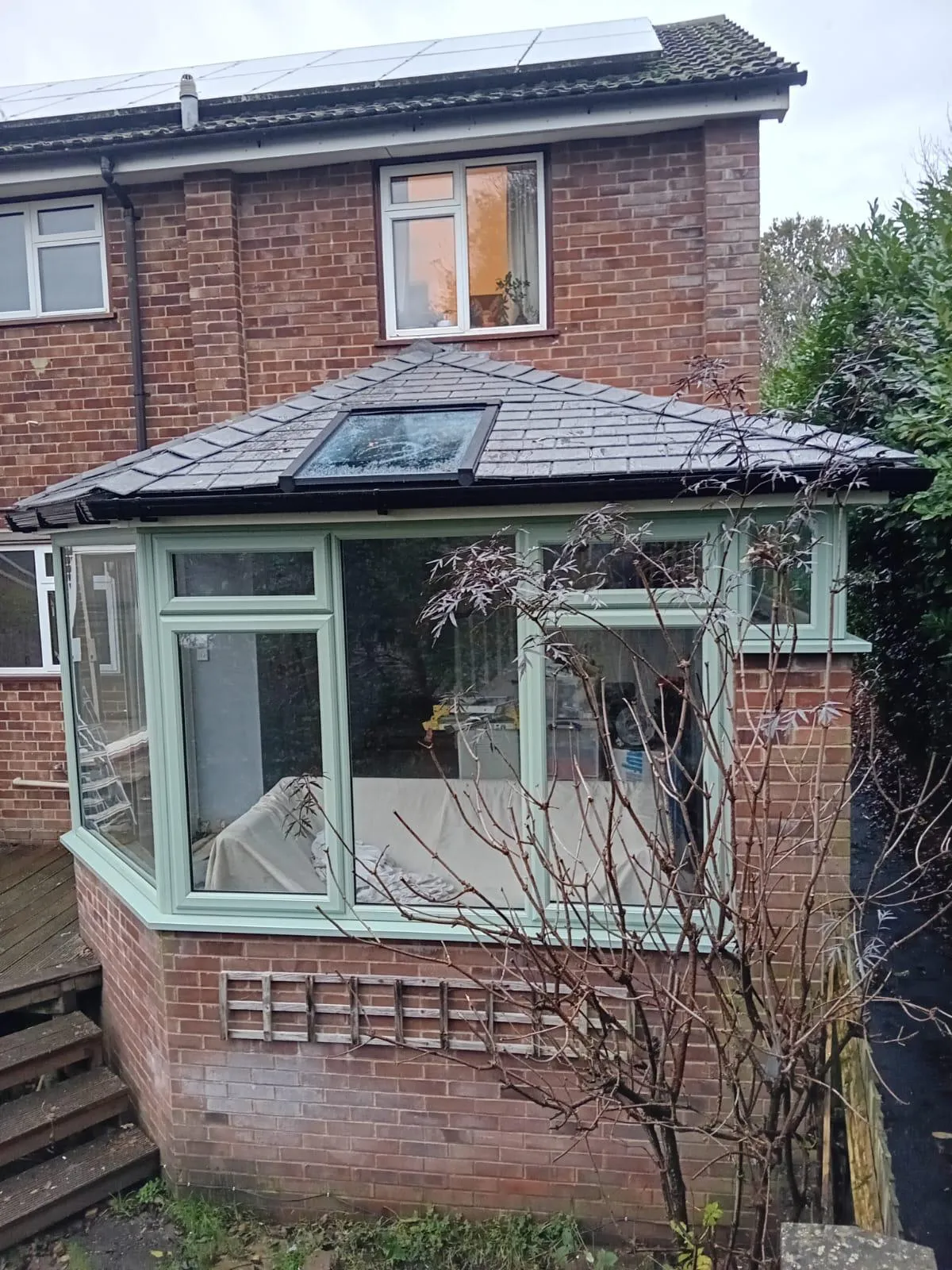
Brick piers, a flat insulated roof around the perimeter and a glazed lantern over the middle — a room that reads as part of the house.
- Masonry piers and a plastered internal ceiling
- Glazed lantern over the centre for overhead light
- Built and glazed by our own team
East Grinstead showroom · covering Sussex, Surrey and Kent
10/10 on Checkatrade
From 149 verified customer reviews
Certass registered
Fully insured and SafeContractor approved
10 year guarantee
On every product we supply and install
Family run since 2007
Our own fitters — never subcontracted out
Why an orangery
It looks like it was always there
The difference between an orangery and a conservatory is mostly the amount of solid wall — and that changes how the room feels entirely.
Brick or rendered piers between the glazing tie it into the house, and a flat insulated perimeter roof lets you plaster a proper ceiling with downlights inside. The lantern over the middle does the work of a glass roof without the whole room being glass.
The result sits between a conservatory and an extension: warmer and more solid than the first, lighter and quicker than the second.
- Brick, block or rendered piers to match the house
- Insulated perimeter roof with a plastered ceiling
- Glazed lantern sized to the room
- Full-height glazing or dwarf walls between piers
Benefits
What an orangery gives you
Reads as part of the house
Masonry piers and a plastered ceiling rather than a glazed box bolted on.
Overhead light where it counts
A lantern over the middle puts daylight into the centre of the room.
Warm and quiet
An insulated perimeter roof holds heat and takes the drumming out of heavy rain.
Somewhere to put things
Solid walls between the glazing mean sockets, radiators and furniture against a wall.
Bigger spans
The structure carries more, so you can go wider than a conservatory frame allows.
10 year guarantee
Everything we supply and install is covered, and we’re Certass registered.
Worth knowing
It is building work, and that is the point
An orangery involves foundations, masonry and a structural roof, so it goes through building control.
That means proper footings, insulation to current standards and a sign-off at the end — all of which is why the room performs like part of the house rather than an add-on.
It also means it takes longer and costs more than a conservatory. We will be straight with you about both at survey rather than after the base is in.
Roof types
Choosing the roof over the top
An orangery pairs an insulated perimeter with a lantern, but the specification of both is still yours.

Warm Roofs
An insulated, tiled roof that turns a freezing conservatory into a room you use all year — usually onto the existing frames.
Explore warm roofs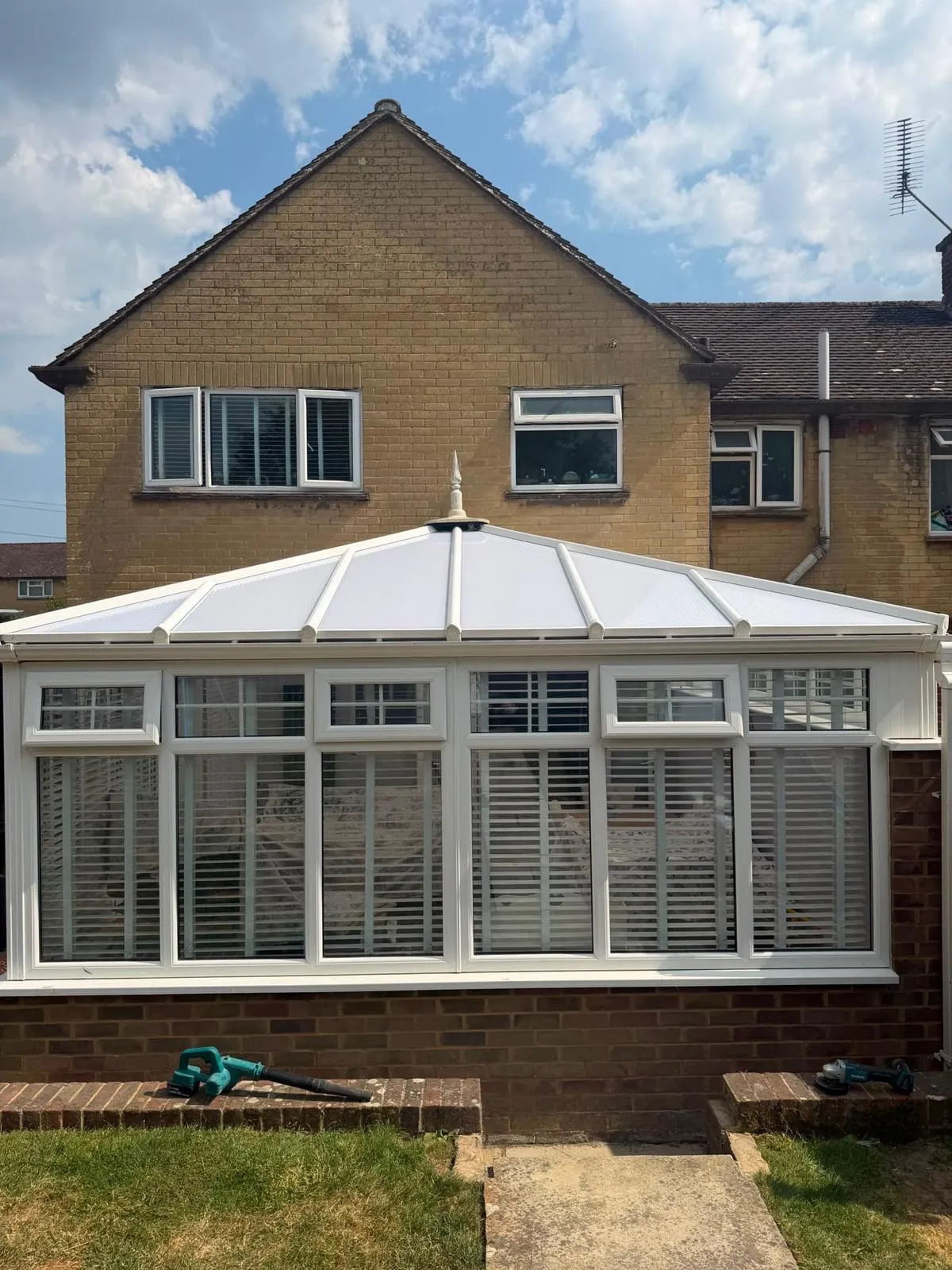
Solid Roofs
A fully tiled roof with a plastered ceiling inside. The warmest and quietest option, and the one that reads as a real room.
Explore solid roofs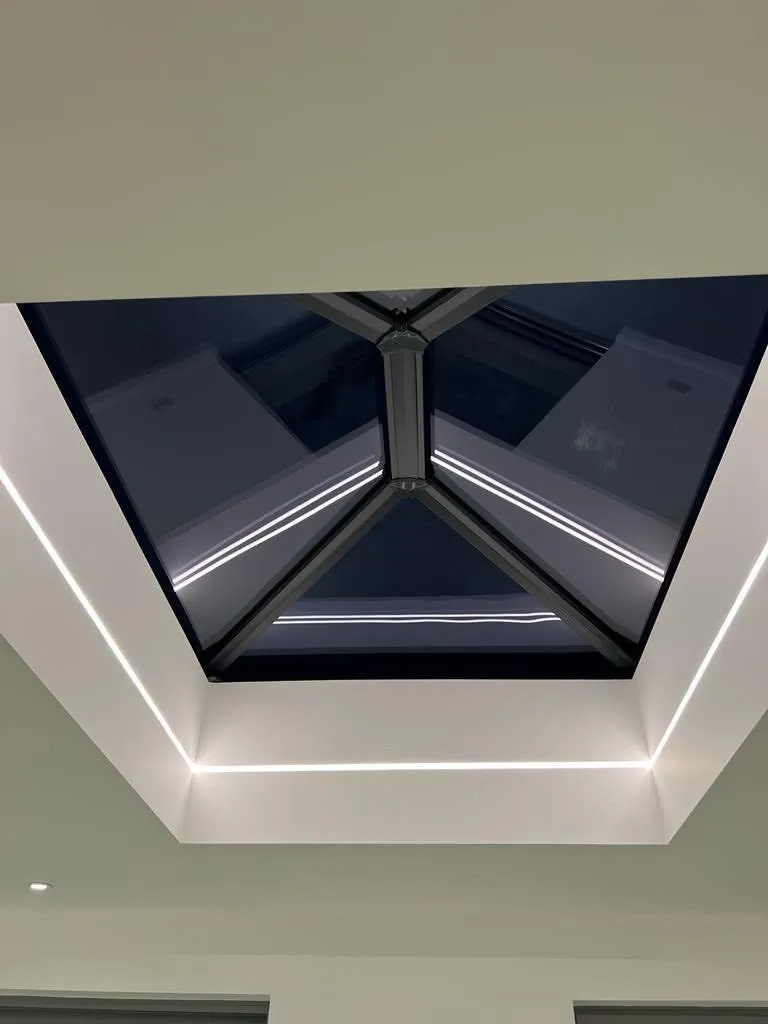
Glass Roofs
Self-cleaning, solar-controlled glass that keeps the daylight while cutting the glare and the heat build-up.
Explore glass roofs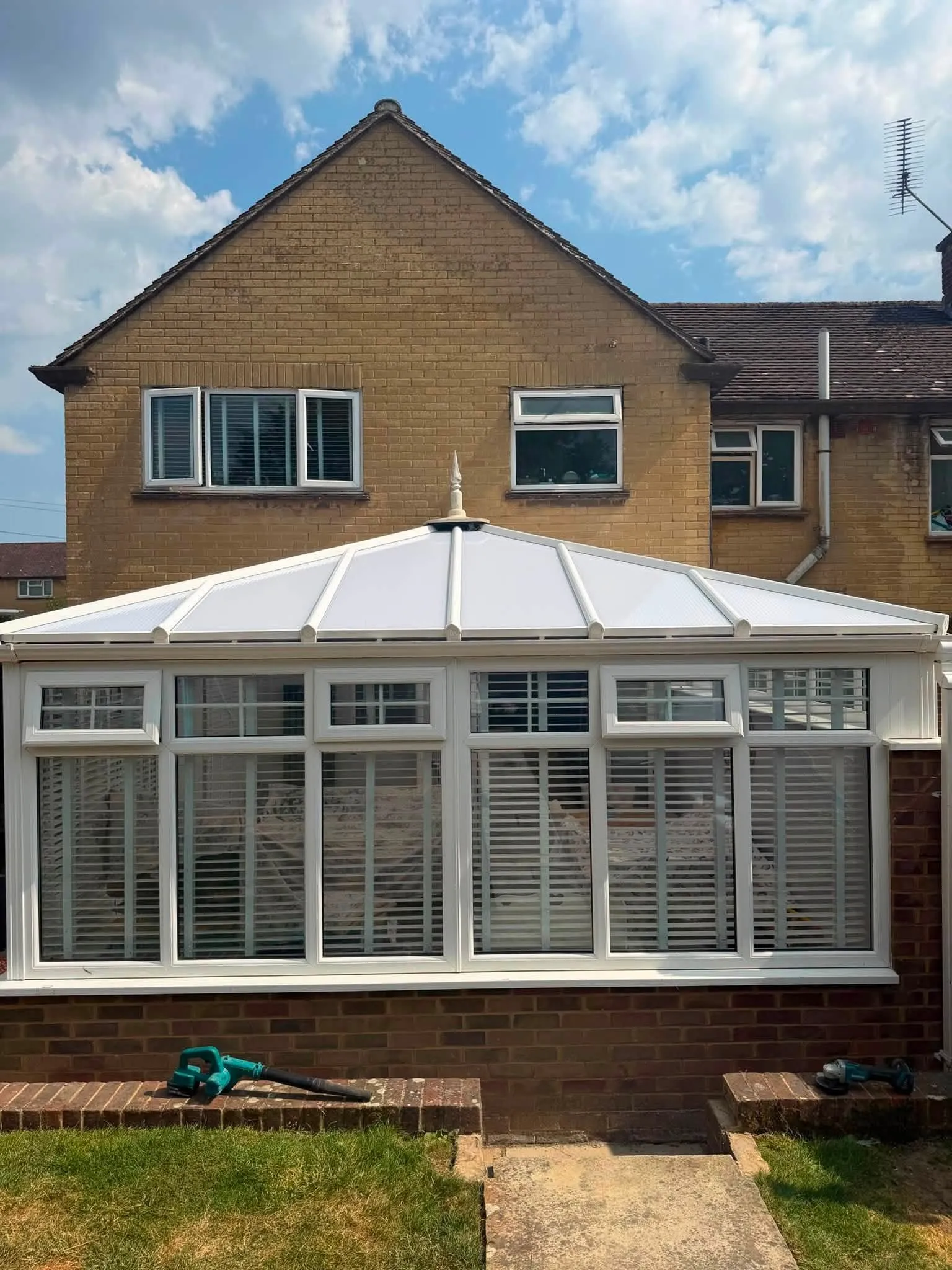
Polycarbonate Roofs
The lightest and cheapest option. Fine as a budget cover, but noisy in rain and the first thing we suggest replacing.
Explore polycarbonate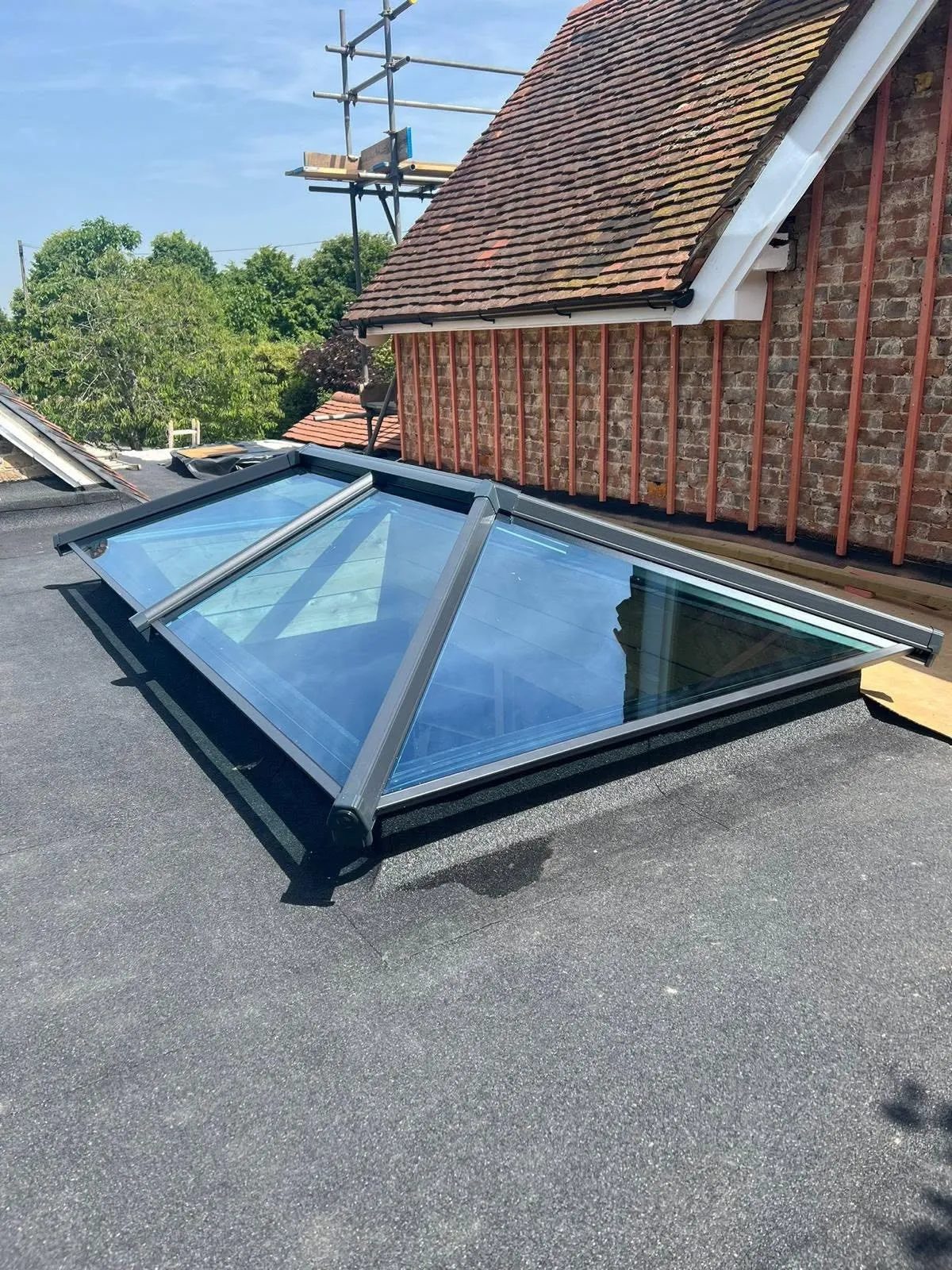
Roof Options
Rooflights, lanterns, tile finishes, internal spotlights and ceiling colours — the choices that come after the roof type.
Explore roof optionsWhat is the difference between an orangery and a conservatory?
Is an orangery warmer than a conservatory?
Does it need building regulations approval?
Can I have downlights and radiators in it?
How long does it take?
Where we work
Orangeries in East Grinstead and across Sussex, Surrey and Kent
We’re based on Station Road in East Grinstead, where West Sussex meets Surrey and Kent, and our own team works throughout all three counties.
Towns we cover include
- East Grinstead
- Crawley
- Horley
- Haywards Heath
- Burgess Hill
- Horsham
- Crowborough
- Tunbridge Wells
- Tonbridge
- Sevenoaks
- Redhill
- Reigate
- Caterham
…and the villages in between. If you’re in Sussex, Surrey and Kent, the answer is almost certainly yes.
Free quotations
Thinking about an orangery?
Book a free survey and we’ll set out what will fit, what it involves and what it costs.