East Grinstead showroom · covering Sussex, Surrey and Kent
10/10 on Checkatrade
From 149 verified customer reviews
Certass registered
Fully insured and SafeContractor approved
10 year guarantee
On every product we supply and install
Family run since 2007
Our own fitters — never subcontracted out
Holtye Windows in Brighton
A city of sash windows, and of rules about them
Brighton and Hove has 34 conservation areas, and in most of the best known the council has removed the usual freedom to change windows and doors. Fit the wrong ones and the council can require them to come out again. Fit the right ones and the house looks as it should and is warm for the first time.
Away from the centre the picture changes completely. Patcham, Hangleton, Woodingdean and Saltdean are streets of inter-war and post-war houses where uPVC casements, composite doors and bifolds are entirely normal. We work in both, from East Grinstead, twenty-two miles to the north.
Timbersliding sashes for street fronts in the conservation areas, where the council expects the original material. uPVC sashes or casements for rear elevations and the suburbs. Aluminium for the modern houses and flats that were designed with it.
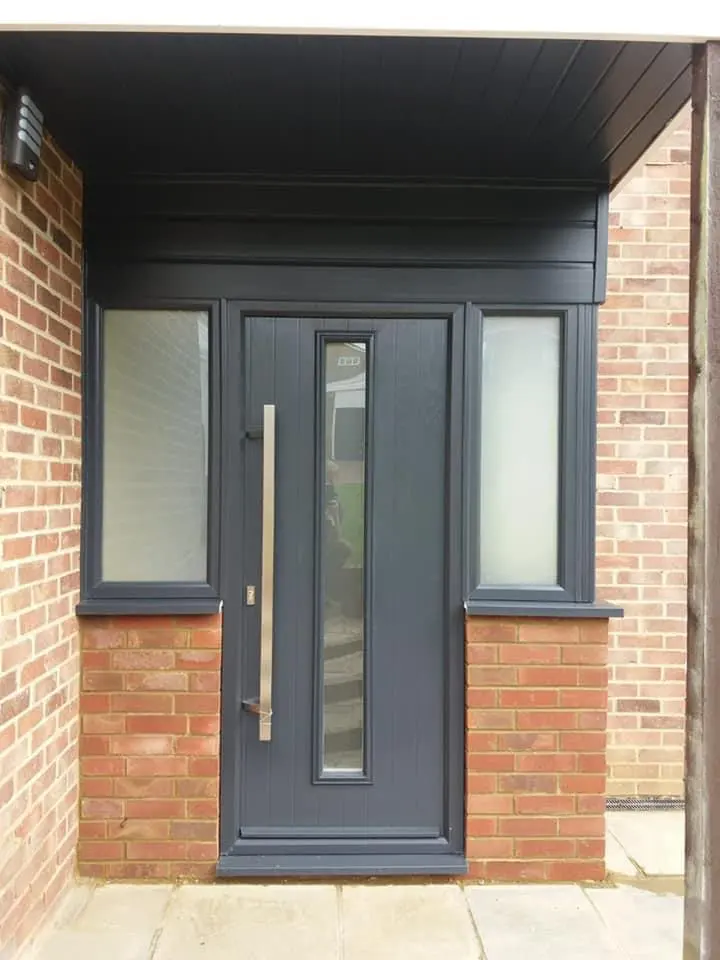
In an Article 4 area a new front door needs permission, and should follow the original panelled pattern. Elsewhere a composite door stands up to sea air far better than painted softwood.
Many of the conservatories added to houses in Patcham, Hangleton and Woodingdean in the 1990s are now too hot or too cold to use. A warm roof on the existing frames gives the room back.
Three centuries of housing, and the window follows the date.
The Regency terraces of Kemp Town, Brunswick and the seafront squares have curved bow fronts, stucco, iron balconies and tall timber sashes. Behind the stucco the walls are often bungaroosh, a local mix of flint, rubble and lime that does not hold a careless fixing, so frames here have to be set with some thought.
Victorian Brighton climbs the hills behind: Hanover, Round Hill, West Hill, Preston Park and the terraces of Hove, with three-sided bays and, later, square brick ones. The sash is by far the commonest window, and these are the streets where a casement in a sash opening does most harm.
The outer suburbs are twentieth century: semi-detached houses at Patcham, Hangleton, West Blatchington and Portslade, the estates at Moulsecoomb, Bevendean and Hollingbury, and Woodingdean, Rottingdean and Saltdean to the east. Most were built with casements, and there the choice is yours.
Our work
The kind of work Brighton asks us for
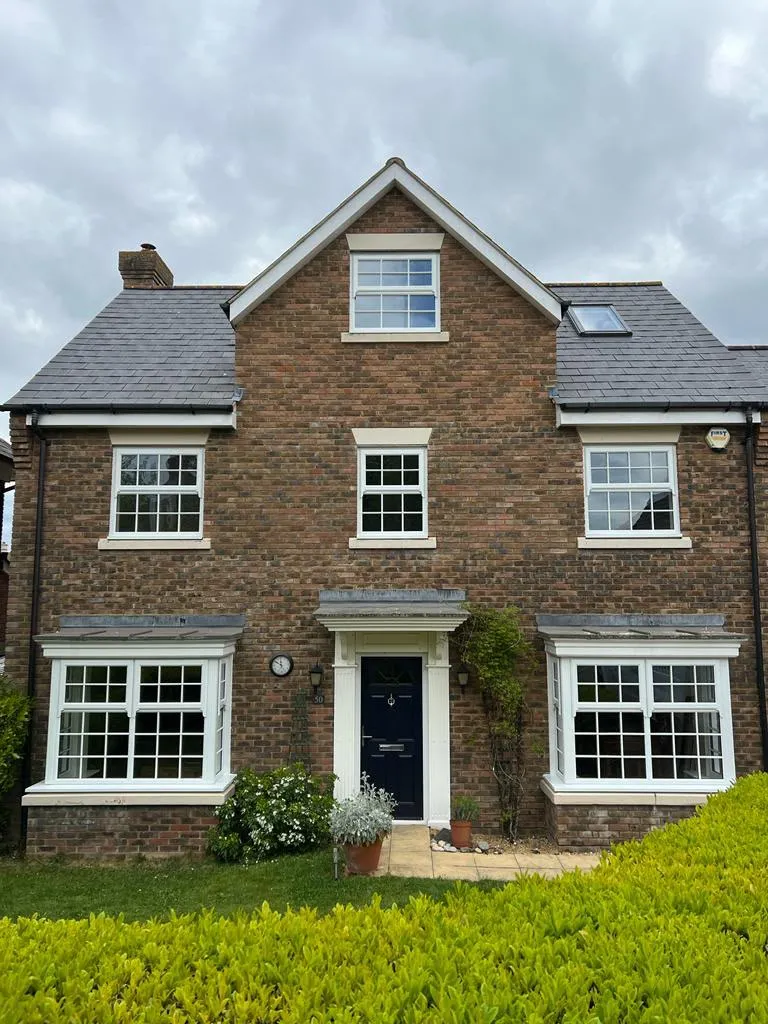
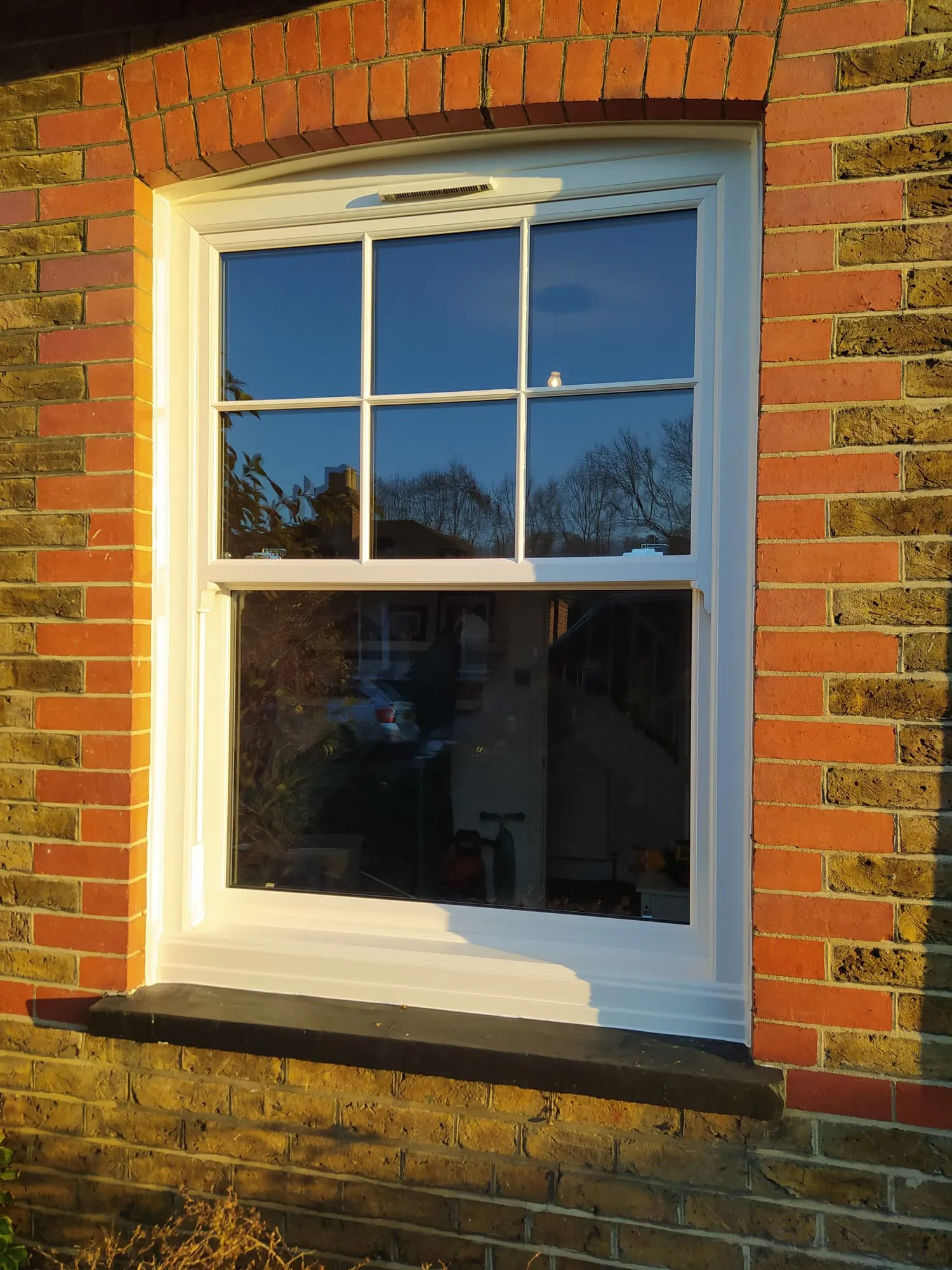
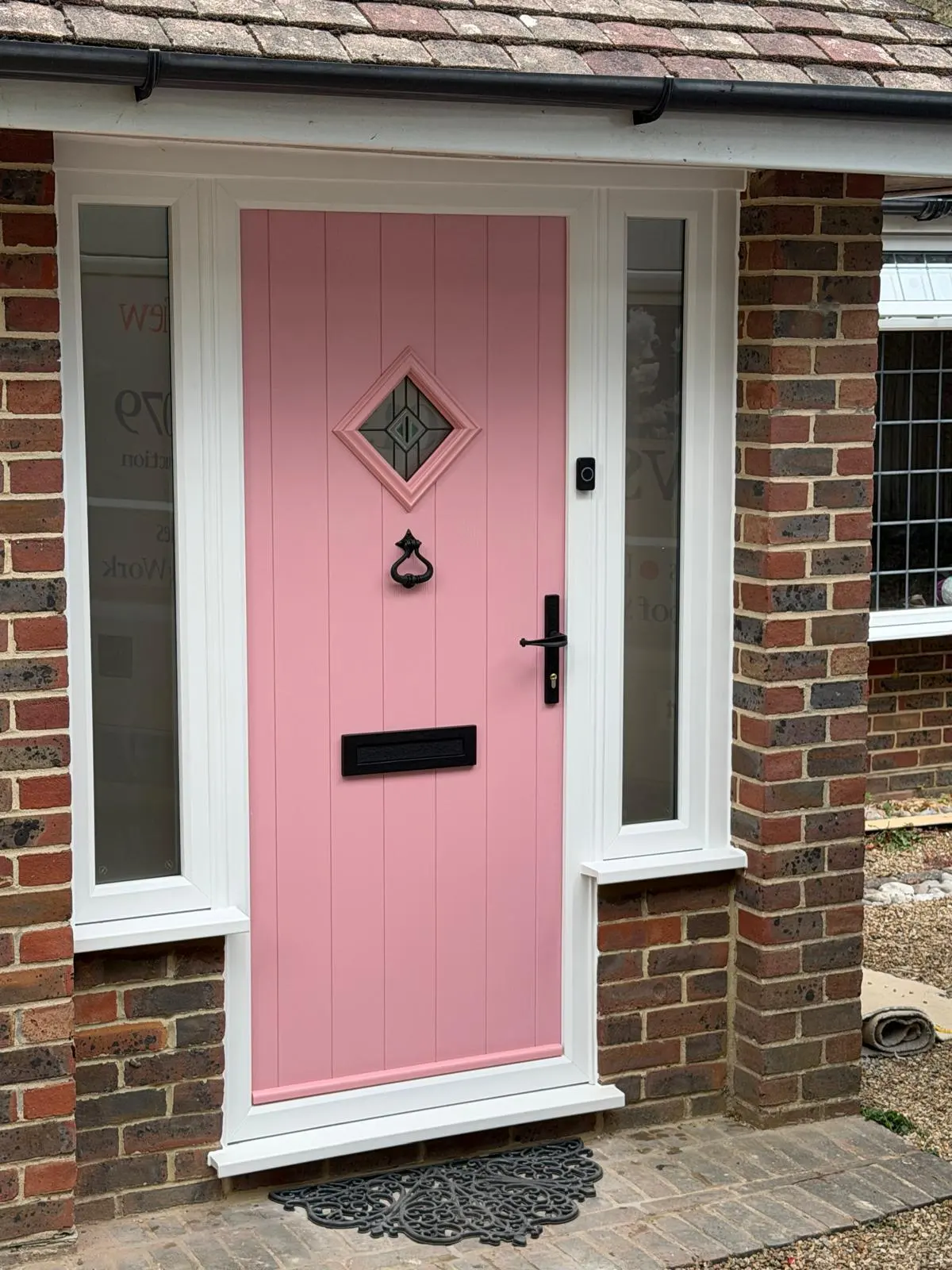
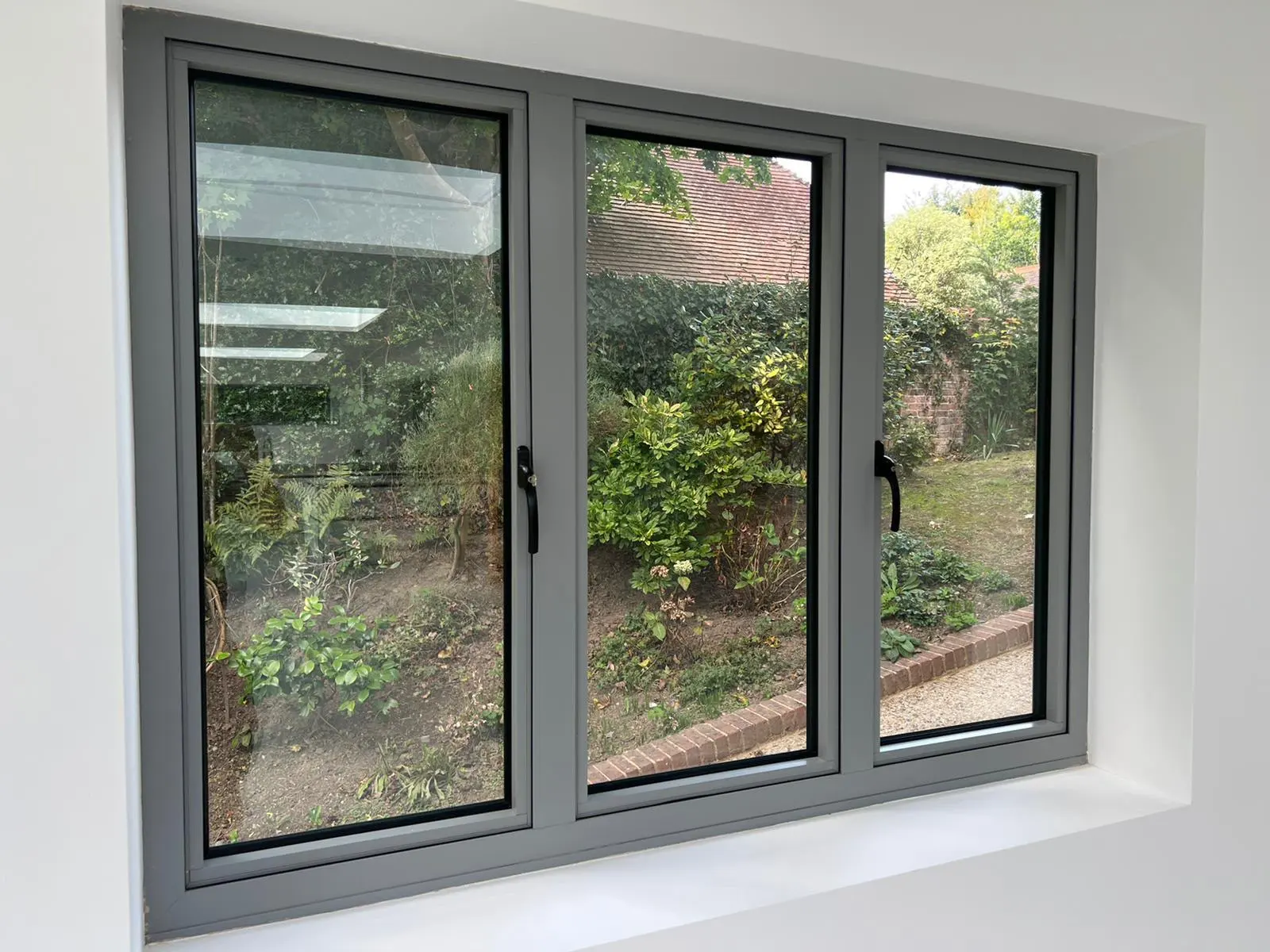
All our own installations, photographed on site across Sussex, Surrey and Kent. Select a photo to see it full size.
Local planning
Conservation areas and Article 4 directions in Brighton and Hove
Brighton & Hove City Council is the planning authority for the city, apart from the 40 per cent of its area that lies in the South Downs National Park, around Stanmer and Falmer, where the National Park Authority decides.
In many of the 34 conservation areas the council has made Article 4 directions. They mean planning permission is needed for replacement windows and doors, new porches, new roof coverings and painting the outside. They usually apply to single houses, and mostly to the street front. Kemp Town, Brunswick, Cliftonville, The Avenues, North Laine, Preston Park, Round Hill, West Hill, Queen’s Park, Patcham, Rottingdean and the seafront squares are all covered.
The council’s guidance, SPD09 Architectural Features, sets out what it will accept. Original windows should be kept unless they are beyond economic repair. Replacements must match the style, the way they open, the proportions and the detail of the originals, and on a street front the material as well, which in practice means timber. Double glazing is generally acceptable if the units are slim enough to keep the glazing bars fine. On rear and side elevations out of public view, uPVC can be supported.
Flats are a separate case everywhere in the city. A flat has no permitted development rights, so any change to the material or appearance of its windows needs planning permission.
The national rules, briefly
Replacing the windows and doors of a house does not normally need planning permission, as long as the new ones look similar to the old.
Flats and maisonettes do not have that right, and a listed building needs listed building consent. Check with the council before changing either.
Every replacement window and external door has to meet Building Regulations. We’re Certass registered, so we certify the work ourselves and you receive the certificate within eight weeks.
A conservatory or single-storey rear extension is often permitted development too, within size limits that tighten in conservation areas and protected landscapes.
Worth knowing locally
Sea air
Salt and wind are hard on anything facing the front. Painted softwood needs constant upkeep, plated steel hinges pit and seize, and a poor powder coating chalks within a few years.
For seafront and clifftop homes it is worth asking for stainless steel hinges and handles, a marine-grade finish on aluminium, and hardwood or engineered timber wherever timber is required. We will go through what suits your house, and its exposure, at survey.
Projects
Recent projects
We haven’t written up a job in Brighton itself yet. These show the standard of work, with photos and the detail of what was done.
Can I replace sash windows with uPVC in a Brighton conservation area?
On the street front, almost certainly not. Where an Article 4 direction applies you need planning permission, and the council expects the original material, which means timber. On a rear or side elevation that cannot be seen from the street, uPVC can be acceptable. Outside the conservation areas, on a house, you are free to choose.
Can I have double glazing in a period house in Brighton or Hove?
Usually. For unlisted houses in conservation areas the council generally allows double glazing, provided street-facing windows match the originals in material, style and section. That often means slim units of 12 to 14 mm, so the glazing bars stay fine. Listed buildings are stricter and need listed building consent.
I own a flat in Hove. Do I need permission to change the windows?
Yes. Flats have no permitted development rights, so any change to the material or appearance of the windows needs planning permission wherever in the city the building is, and usually the freeholder’s agreement too. Like-for-like replacement, in the same material and design, is the simplest case.
Do you cover Hove and the outlying villages?
Yes. Hove, Portslade, Hangleton, Patcham, Woodingdean, Rottingdean and Saltdean are all part of the city and all covered, as are Southwick, Falmer and Peacehaven.
Free quotations
Ready for a quote in Brighton?
Book a free, no-obligation survey at your home in Brighton, or come and see us at the East Grinstead showroom.
We don’t run ads. Google Analytics counts visits to the site, and our Google reviews and maps come from third parties that may set cookies. You can switch all of these off.